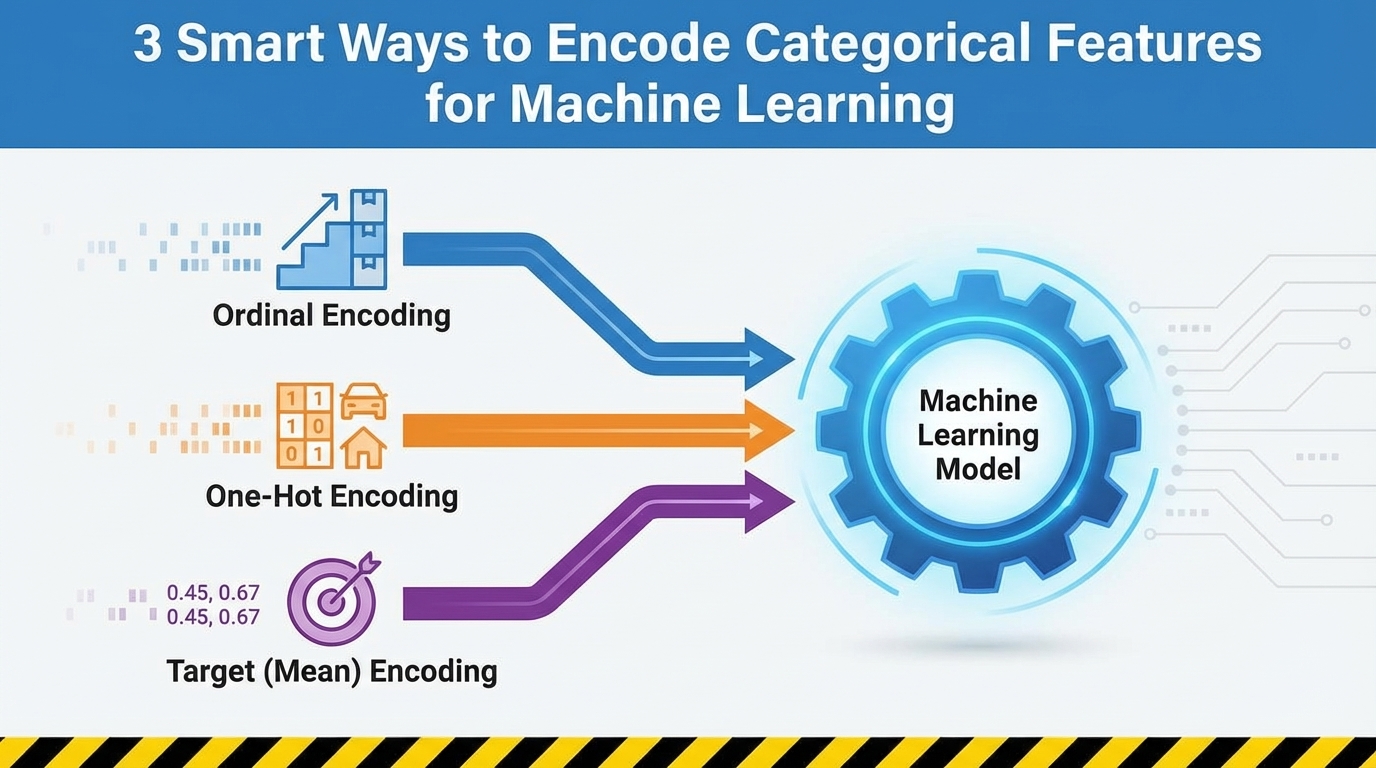
3 Smart Ways to Encode Categorical Features for Machine Learning

In this article, you will learn three reliable techniques — ordinal encoding, one-hot encoding, and target (mean) encoding — for turning categorical features into model-ready numbers while preserving their meaning. Topics we will cover include: When and how to apply ordinal (label-style) encoding for truly ordered categories. Using one-hot encoding safely for nominal features and…

Evaluating Perplexity on Language Models

A language model is a probability distribution over sequences of tokens. When you train a language model, you want to measure how accurately it predicts human language use. This is a difficult task, and you need a metric to evaluate the model. In this article, you will learn about the perplexity metric. Specifically, you will…

MIT in the media: 2025 in review | MIT News

“At MIT, innovation ranges from awe-inspiring technology to down-to-Earth creativity,” noted Chronicle, during a campus visit this year for an episode of the program. In 2025, MIT researchers made headlines across print publications, podcasts, and video platforms for key scientific advances, from breakthroughs in quantum and artificial intelligence to new efforts aimed at improving pediatric health…

How to Speed-Up Training of Language Models

Language model training is slow, even when your model is not very large. This is because you need to train the model with a large dataset and there is a large vocabulary. Therefore, it needs many training steps for the model to converge. However, there are some techniques known to speed up the training process….

Free Local RAG Scraper for Custom GPTs and Assistants

This web scraper runs entirely in your browser and is perfect for creating training data for AI models. It works by reading the website’s sitemap.xml file, making it particularly well-suited for modern platforms like Squarespace and Shopify that automatically generate sitemaps. The scraper preserves the structure of your content, including headings, paragraphs, lists, and tables,…

Guided learning lets “untrainable” neural networks realize their potential | MIT News

Even networks long considered “untrainable” can learn effectively with a bit of a helping hand. Researchers at MIT’s Computer Science and Artificial Intelligence Laboratory (CSAIL) have shown that a brief period of alignment between neural networks, a method they call guidance, can dramatically improve the performance of architectures previously thought unsuitable for modern tasks. Their…

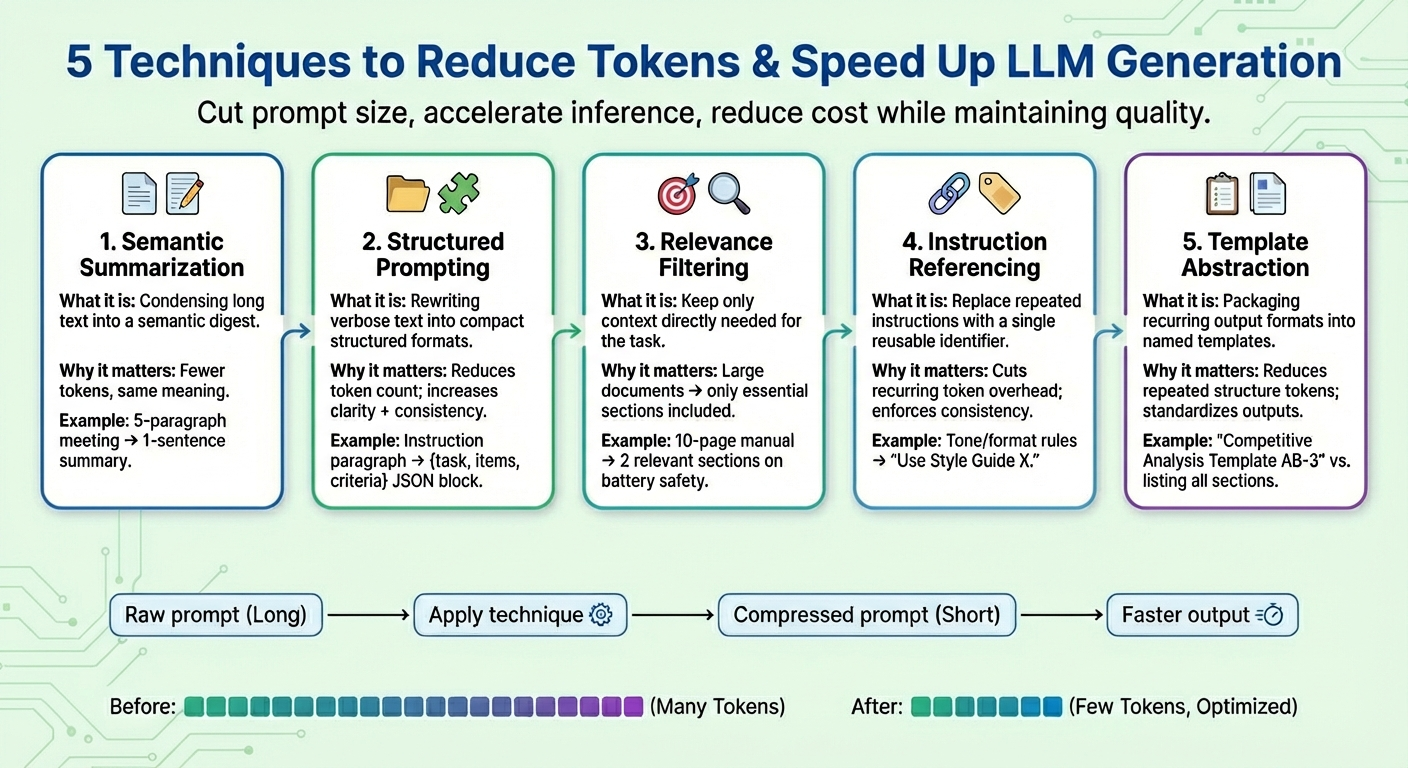
Prompt Compression for LLM Generation Optimization and Cost Reduction

In this article, you will learn five practical prompt compression techniques that reduce tokens and speed up large language model (LLM) generation without sacrificing task quality. Topics we will cover include: What semantic summarization is and when to use it How structured prompting, relevance filtering, and instruction referencing cut token counts Where template abstraction fits…

Is AI Better than Bacon?

Time to get philosophical, because why not? At the core of this cheeky question, “Is AI better than bacon?” lies a deeper inquiry: What do we value more, the power of the mind or the pleasures of the flesh (the delicious, smoked flesh of a pig in this case)? It’s a classic brain-vs-belly showdown, Socrates…